
This sequel refines the original Chicken Road formula with revised scenery, adjusted traffic patterns and a clearer visual layout. The game strips away reels, paylines and bonus rounds in favour of a single mechanic: advance as far as you dare, then cash out before a collision wipes your progress. We tested every difficulty setting, explored the keyboard shortcut options and measured how multipliers stack across successive lanes. Here's what UK players need to know before placing their first wager.
Chicken Road 2: key facts
| Provider | InOut Games |
|---|---|
| Type | Browser-based gambling game (crash variant) |
| RTP | Not disclosed by the provider |
| Volatility | User-selected (four difficulty tiers) |
| Min / max bet | £0.50 minimum; maximum not specified |
| Max win | Not disclosed; depends on difficulty tier and lane progression |
| Mobile | Browser-compatible; resolution scales to mobile devices |
| Demo | Yes |
A focused traffic-dodging game that rewards timing and restraint, let down only by the absence of published RTP figures and maximum win data.
What Is Chicken Road 2?
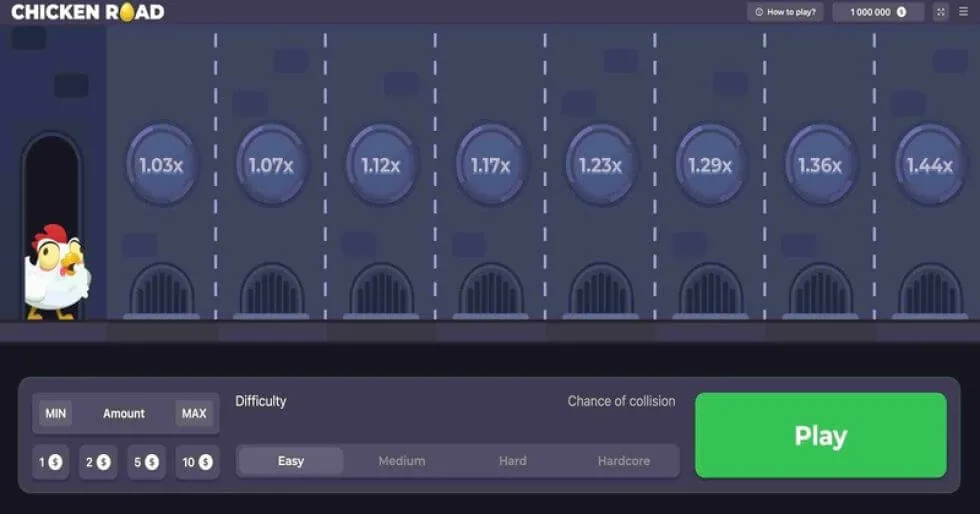
Chicken Road 2 belongs to the crash game family, a category that replaces traditional slot mechanics with a rising multiplier and a player-controlled exit point. You control a white chicken stepping through lanes of oncoming traffic, each successful crossing applying a fixed multiplier to your wager. The game begins at 1.01× on lane one and climbs to 1.19× by lane six, with these factors compounding as you progress. Circular manhole icons on each lane display your active multiplier, featuring concentric rings and spoke patterns that act as visual checkpoints.
InOut positions this title as a sibling to the original Chicken Road, sharing the core mechanic but altering presentation and traffic behaviour. The chicken avatar is rendered with anatomical care: a five-point crimson comb, teardrop wattle, triangular orange beak, grey-shadowed wings and bright yellow legs with three-toed feet. A gentle idle animation loops roughly every two seconds, reinforcing the sense that a living creature stands in the path of oncoming vehicles. Above the play area, a live wins feed streams recent payouts alongside an online counter reporting active users, shown as 23,277 in the interface we tested. These social cues confirm genuine activity and foster a sense of shared participation, a detail often absent from standard slot designs.

How to Play Chicken Road 2
1: Select Your Wager and Difficulty
The control strip at the base offers four circular bet selectors: £0.50, £1, £2 and £7, each marked with dark grey fills, pale borders and white numerals. Choose your stake, then open the difficulty menu to select Easy (30 lanes), Medium (25 lanes), Hard (22 lanes) or Hardcore (18 lanes). The game defaults to Medium, a setting that balances hazard and payout scope. Higher tiers reduce the number of lanes and increase vehicle density, raising collision likelihood with each step.
2: Launch the Round and Navigate Traffic
Press the prominent green 'Play' button to begin. Your chicken starts at the bottom of the screen, facing a stream of turquoise cars moving horizontally across the lanes. Click the chicken or the lane ahead to advance one step. Within the settings menu, you can activate 'Space to spin and go', enabling keyboard input via the Space key for quicker, more rhythmic interaction. Each lane crossed successfully applies its multiplier, displayed on the manhole icon beneath your position. Watch for gaps in traffic and time your move carefully; a collision ends the round immediately and forfeits your accumulated winnings.
3: Cash Out Before Collision
You may withdraw at any moment before entering the next lane, locking in your current multiplier. The decision hinges on two factors: how far you've progressed and how dense the traffic appears ahead. Early exits preserve smaller gains; later exits risk everything for compounded multipliers. Once you cash out or collide, the round ends and your balance updates. The live wins feed at the top displays the latest payout events, including usernames, profile images and prize amounts in green preceded by a plus symbol, confirming that others are collecting genuine winnings in real time.
How Much Can You Win?
Chicken Road 2's payout structure is determined by two variables: your base wager and the number of lanes crossed before cashing out. Each lane applies a fixed multiplier, starting at 1.01× and climbing to 1.19× by lane six. These factors compound, so reaching lane six means you've collected the boost from every prior lane. The difficulty tier you select alters the total number of lanes available—30 on Easy, 25 on Medium, 22 on Hard and 18 on Hardcore—but does not change the multiplier values themselves. Instead, higher tiers increase collision risk through denser vehicle flow, making later lanes progressively harder to reach.
InOut has not disclosed a maximum win ceiling or return-to-player percentage for Chicken Road 2. Without these figures, you cannot calculate theoretical long-term expectation or compare this title's payout structure to standard slots with published RTP ranges. The provider's silence on these metrics is a notable omission, particularly for UK players accustomed to transparency from licensed operators. In practice, your potential win depends on how many lanes you clear and whether you cash out before a collision. The compounding multiplier mechanism rewards patience and timing, but the absence of disclosed limits means you're navigating blind regarding peak payout potential.
- Lane one: 1.01× multiplier applied to your base wager
- Lane six: 1.19× multiplier, representing the peak single-lane factor
- Compounding effect: multipliers stack with each successful crossing
- Difficulty tiers: alter lane count and collision risk, not multiplier values
- Maximum win: not disclosed by InOut Games
Strategies and Sensible Habits
Set a Fixed Cash-Out Target
Decide in advance how many lanes you'll cross before withdrawing. A consistent target—say, four lanes on Medium difficulty—removes the emotional pull to chase one more step. Compounding multipliers tempt you to push further, but collision risk rises sharply in later lanes. A fixed rule protects your balance from impulsive decisions made mid-round, when adrenaline overrides careful judgement. Track your results over ten or twenty rounds to see whether your chosen target yields net gains or losses, then adjust accordingly.
Start on Medium Difficulty to Gauge Traffic Patterns
The game defaults to Medium for good reason: 25 lanes and moderate vehicle density offer a clear view of how traffic behaves without overwhelming you. Easy mode's 30 lanes tempt longer runs, but sparser traffic can lull you into complacency. Hard and Hardcore tiers demand sharper timing and should be reserved for once you've internalised the rhythm of turquoise cars crossing the screen. Medium difficulty lets you build confidence and refine your exit timing before increasing the pressure.
Use the Keyboard Shortcut for Consistent Timing
Activating 'Space to spin and go' in the settings menu replaces mouse clicks with a single key press, reducing the delay between lanes. This suits players who prefer rhythmic input and minimises the risk of mistimed clicks during tense moments. Consistent timing is crucial when vehicles bunch together in later lanes; the keyboard shortcut removes one variable from your decision-making process. Test it in demo mode first to confirm the tempo matches your natural reaction speed before switching to real-money rounds.
Respect Responsible Gambling Limits
Chicken Road 2's session-based structure and instant outcomes make it easy to lose track of time and expenditure. Set a strict budget before you begin and stop when you reach it, regardless of whether you're winning or losing. The live wins feed and online counter create a sense of communal activity that can encourage prolonged play; mute these elements if they distract you from your limits. Remember that all casino games, including crash variants, are designed to favour the house over time. Only wager money you can afford to lose, and never chase losses by increasing your stake mid-session. If you find yourself unable to stick to your limits, seek support from organisations such as GamCare or BeGambleAware. Players must be 18 or older to participate.
Free Demo or Real Money?
Chicken Road 2 offers a demo mode accessible without registration or payment details. This version replicates the full game, including all four difficulty tiers, multiplier mechanics and interface controls. Demo credits replenish automatically, letting you test strategies, familiarise yourself with traffic patterns and experiment with the keyboard shortcut without financial risk. The demo serves as an essential sandbox for gauging whether the game's tempo and volatility suit your preferences before committing real funds.
Switching to real-money mode requires an account at a partner casino that hosts InOut titles. Check that the operator holds a valid UK Gambling Commission licence and supports your preferred payment method. Real-money play introduces genuine risk and reward: successful cash-outs credit your balance, while collisions forfeit your wager. The psychological difference between demo and real stakes is significant; many players find their exit timing shifts when actual money is involved. Use the demo extensively to build confidence, then start with the minimum £0.50 wager on Medium difficulty until your strategy proves consistent. Gradually increase your stake only if your results justify it, and never wager more than you've allocated for entertainment.
Our Opinion
Chicken Road 2 distils the crash game format to its essentials: a rising multiplier, player-controlled exits and escalating risk. The traffic-dodging theme adds a layer of visual engagement absent from abstract curve-climbing variants, and the four difficulty tiers let you calibrate volatility to match your risk tolerance. The keyboard shortcut option demonstrates thoughtful design, and the live wins feed confirms active participation across the network. InOut has built a focused, mechanically sound title that rewards timing and restraint over impulsive chases.
The absence of disclosed RTP and maximum win figures is a serious shortcoming. UK players expect transparency from licensed operators, and the lack of these metrics makes it impossible to compare Chicken Road 2's long-term value against slots with published return percentages. The compounding multiplier structure is easy to grasp, but without knowing the house edge or peak payout ceiling, you're navigating blind. The game's simplicity is both a strength and a limitation: it executes its core mechanic cleanly, but offers no feature variety or bonus rounds to sustain extended sessions. If you value straightforward gameplay and tolerate incomplete technical disclosure, Chicken Road 2 delivers a competent crash experience. If transparency and feature depth matter more, look elsewhere.
👍 Pros
- Four difficulty tiers let you adjust volatility and lane count to suit your style
- Compounding multipliers from 1.01× to 1.19× per lane create clear risk-reward dynamics
- Keyboard shortcut option enables faster, more rhythmic lane progression
- Demo mode available without registration, replicating full game functionality
- Live wins feed and online counter confirm active community participation
👎 Cons
- No disclosed RTP percentage, preventing informed comparison with other titles
- Maximum win ceiling not published, leaving peak payout potential unknown
- Limited feature variety; a single mechanic with no bonus rounds or modifiers
- Base wager options cap at £7, restricting flexibility for higher-stakes players
Frequently asked questions
What is the RTP of Chicken Road 2?
InOut Games has not disclosed a return-to-player percentage for Chicken Road 2. Without this figure, you cannot calculate the theoretical long-term expectation or compare the game's house edge to standard slots with published RTP ranges. This lack of transparency is a notable omission for UK players accustomed to detailed technical data.
How do difficulty tiers affect payouts?
Difficulty tiers alter the number of lanes and collision risk, not the multiplier values themselves. Easy mode offers 30 lanes with sparser traffic, while Hardcore restricts you to 18 lanes with maximum vehicle density. Higher tiers make later lanes harder to reach but do not increase the 1.01× to 1.19× multiplier progression applied per lane.
Can I play Chicken Road 2 on mobile?
Yes. Chicken Road 2 is a browser-based game that scales to mobile devices. The interface adapts to smaller screens, and touch input replaces mouse clicks for lane progression. Performance depends on your device's capabilities and browser version, but the game's resolution is estimated at 1920×1080 on desktop, with responsive scaling for mobile.
Is there a maximum win limit?
InOut Games has not published a maximum win ceiling for Chicken Road 2. Your potential payout depends on your base wager, the number of lanes crossed and the compounding multiplier structure. Without a disclosed limit, you cannot predict the peak prize possible on any given difficulty tier.
Should I start on Easy or Medium difficulty?
Medium difficulty is the recommended starting point. It offers 25 lanes with moderate traffic density, giving you a clear view of how vehicles behave without overwhelming you. Easy mode's 30 lanes tempt longer runs but can foster complacency due to sparser traffic. Build confidence on Medium before attempting Hard or Hardcore tiers, which demand sharper timing and increase collision risk significantly.